Ethics is an engineering discipline or it is decoration.
Associate Professor of Artificial Intelligence at the University of the Cumberlands, teaching in the PhD and Executive Master's programs. I also teach in the School of Professional Studies at Wake Forest University.
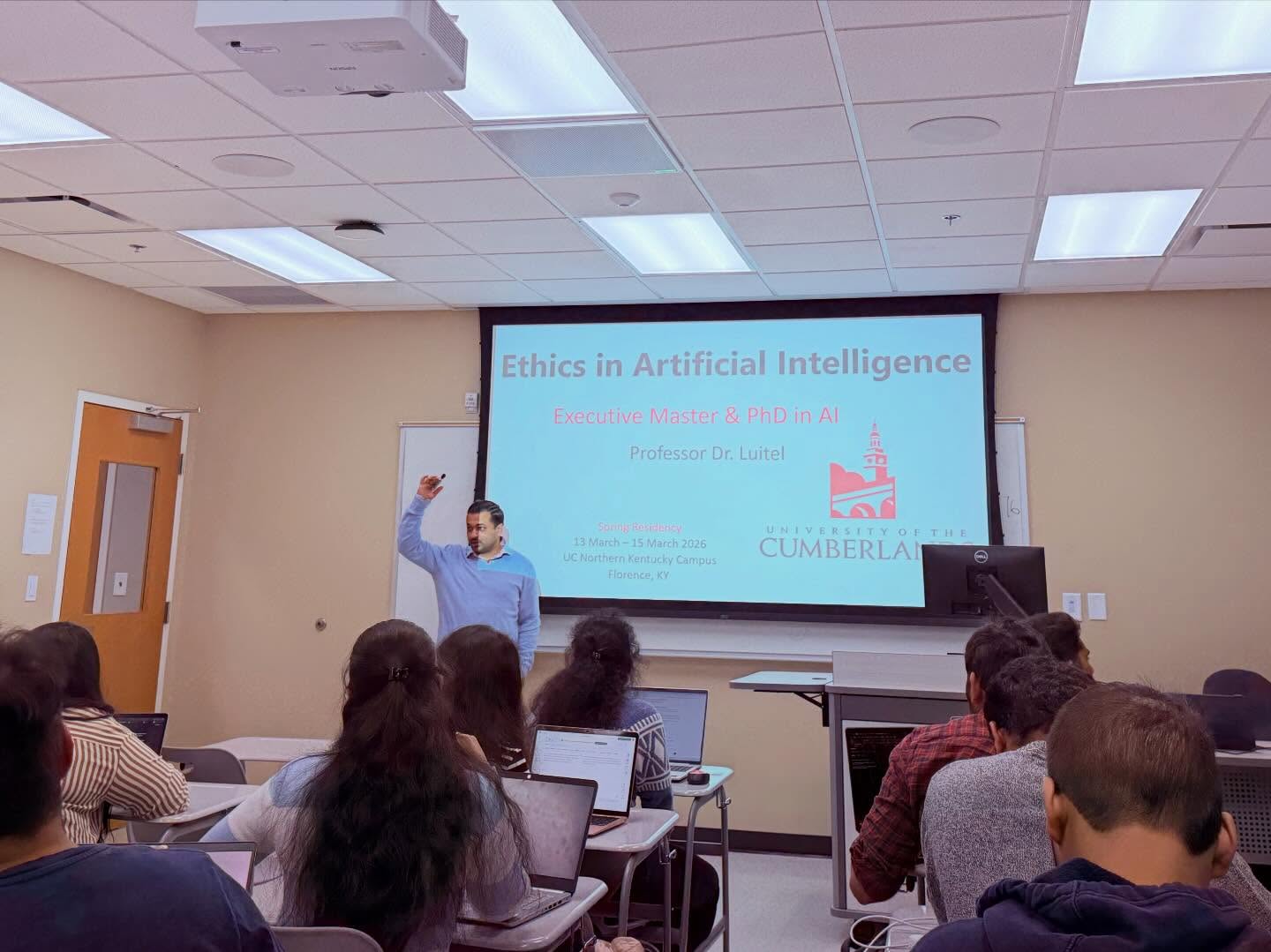
What happens in the room
Students do not study ethics as a reading list. They argue real deployments. Model bias with a shipping deadline attached. Transparency traded against user privacy. An automated decision system that nobody in the organization wants to own. These are the arguments I sat in at Microsoft, reproduced with the constraints intact, because the constraints are what make them hard.
The recurring exercise is critique of a real deployment, examining the technical architecture alongside the regulatory and ethical trade-offs behind it. Students who do this repeatedly stop treating responsible innovation as a values statement and start treating it as systems thinking, which is the actual transferable skill.
The other thing they learn is that this work is collaborative by necessity. Building trustworthy AI requires continuous argument between engineers, policymakers, ethicists and the people who will use the system. Compliance is not bureaucracy. It is the mechanism by which trust becomes durable enough to build on.
Graduate and doctoral teaching
- PhDAI 832 · Ethics in Responsible AIDesigned for the University of the Cumberlands' first PhD in Artificial Intelligence cohort. Doctoral seminar treating fairness, transparency, accountability and safety as design constraints with operational consequences rather than as principles to be affirmed. Fall 2026.
- MSAI 633 · Ethics in AIGraduate course on how ethical commitments survive or fail contact with deployment pressure, procurement cycles and regulatory scope.
- MSAI 511 · Introduction to Artificial IntelligenceThe meaning behind common AI terminology, including neural networks, machine learning, deep learning, and data science.
- MSAI 599 · Transforming Business with AIHow organizations actually adopt AI systems, including the governance and assurance questions that surface after the pilot succeeds.
- EMG 712 · Innovation Strategy for AI & Emerging TechnologiesDesigned for the Wake Forest University's first Engineering Management cohort. Graduate course to prepare engineering managers to lead innovation by strategically evaluating and integrating emerging technologies into engineering practice.
- IT 595 · Master's Capstone in Cybersecurity ManagementAt Purdue University Global, I supervise roughly 30 graduate students per cohort through the program’s culminating course. Each student develops a comprehensive project addressing a cybersecurity problem drawn from industry or the research community, integrating knowledge from across the degree. The project must demonstrate mastery, but it should also answer a practical question: What problem is this student now prepared to solve?
Current and doctoral work
- Modeling data-breach risk with machine learningDoctoral research at George Washington University developing a framework for quantifying data-breach risk using machine learning models applied to high-dimensional panel data. The motivating problem is that breach risk is usually described qualitatively, in heat maps, which makes it resistant to the kind of comparison decisions actually require.
- AI agent identity, authorization and attributionWhen an agent acts across systems, the question of who did this stops having a clean answer. Existing identity and authorization models assume a human principal behind every action. Current interest is in what evidence an organization would need to reconstruct and defend an agent's actions after the fact.
- Evidence as the unit of AI governanceOngoing line of argument across teaching and writing: governance claims that cannot be evidenced are indistinguishable from claims that are false, from the position of anyone outside the organization.
Doctoral supervision
I advise and serve on committees for doctoral candidates working in AI governance, responsible AI and cybersecurity. Prospective students working on questions at the intersection of AI systems, regulation and security assurance are welcome to write.